Our Sustainable Process
Leather is one of nature's most remarkable materials, and should be part of a living, regenerative system. Yet today most hides are shipped thousands of miles to be processed in industrial tanning systems that prioritise scale and low cost, often relying on intensive chemical processes.
We believe hides should be valued close to where the animals lived, tanned with natural, biodegradable materials, and returned safely to the land through a process that causes no harm to the Earth from which the hides came. By keeping tanning local and giving value to by-products that might otherwise be discarded, we create leather that nourishes a regenerative cycle rather than contributing to a global waste stream.
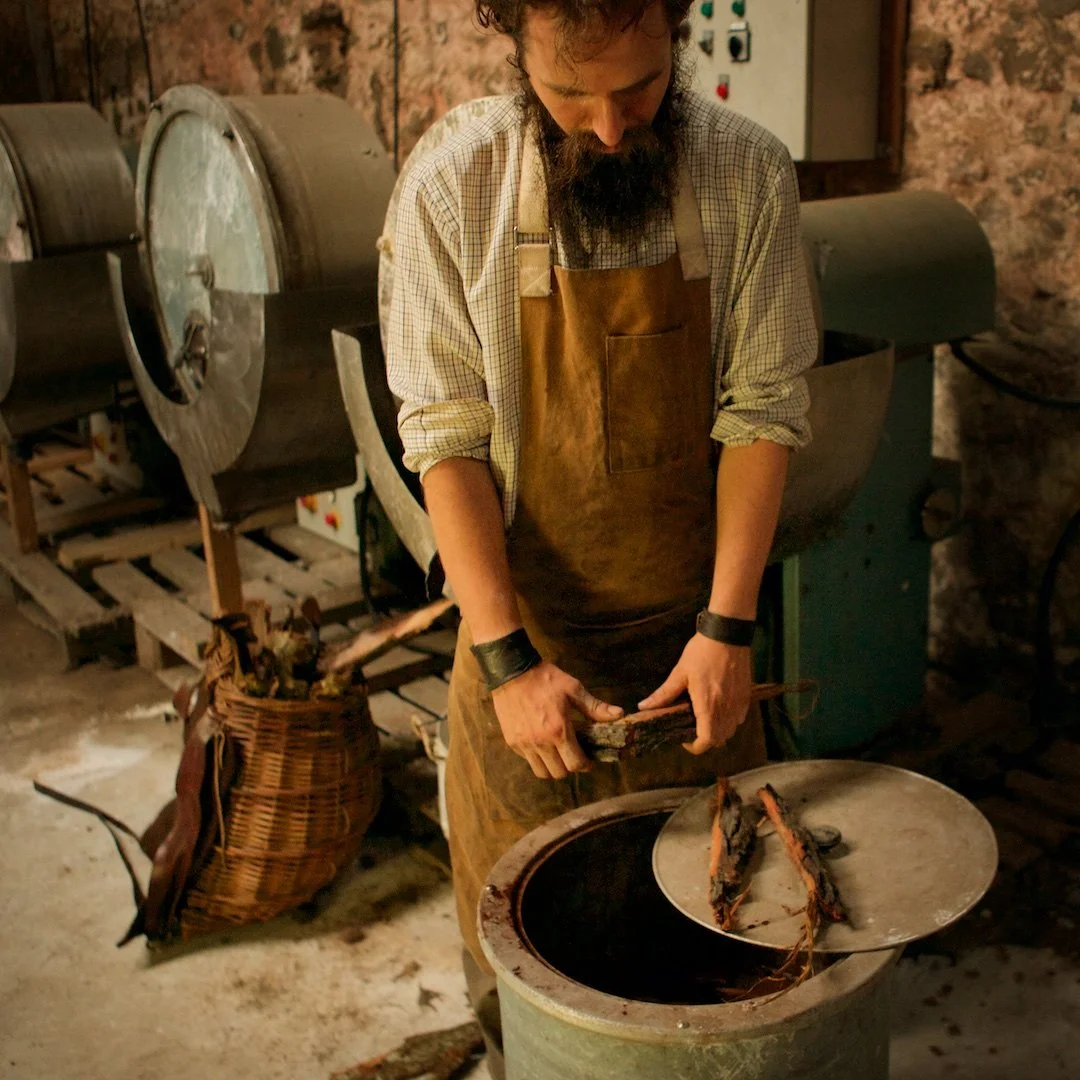
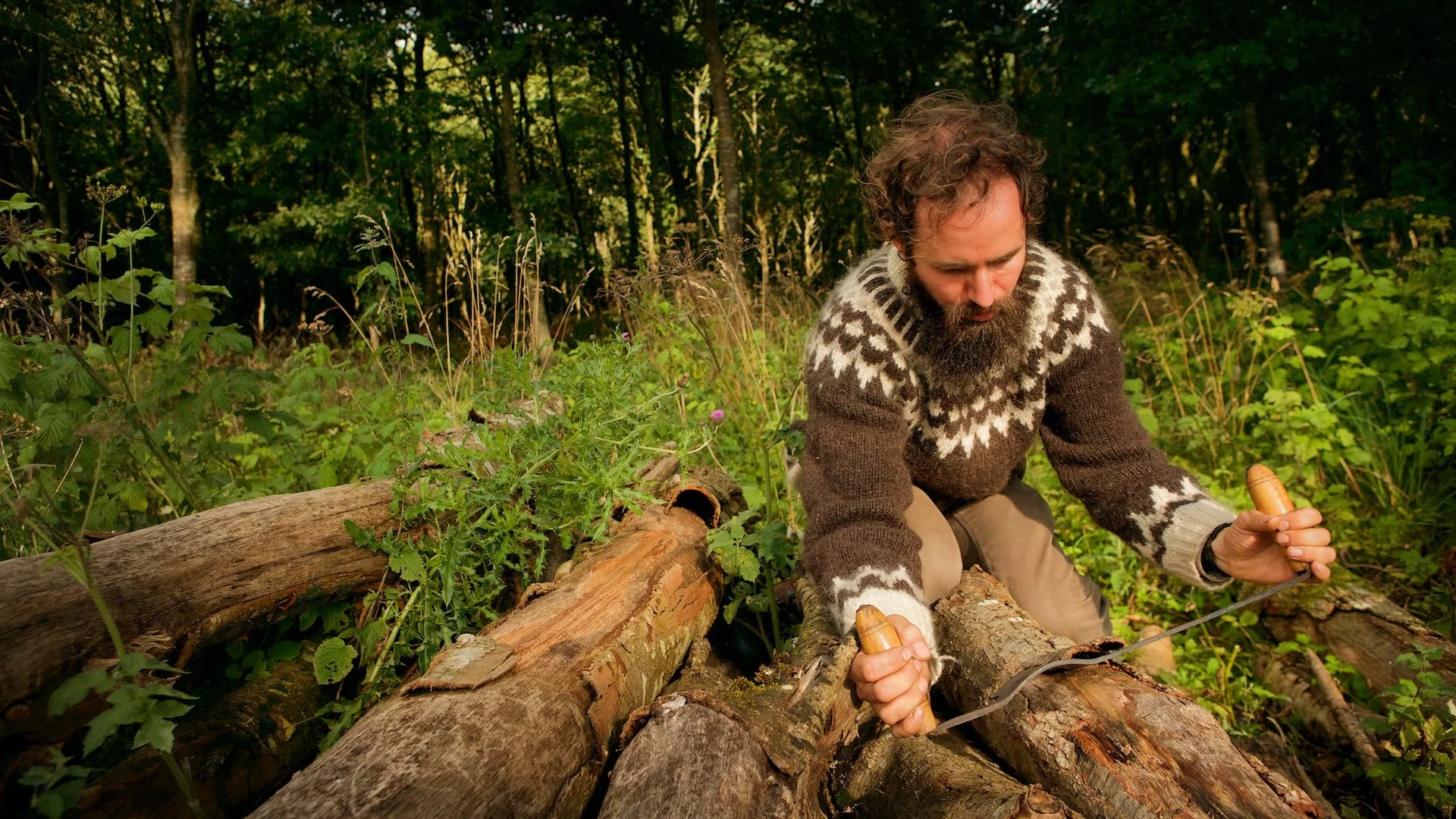
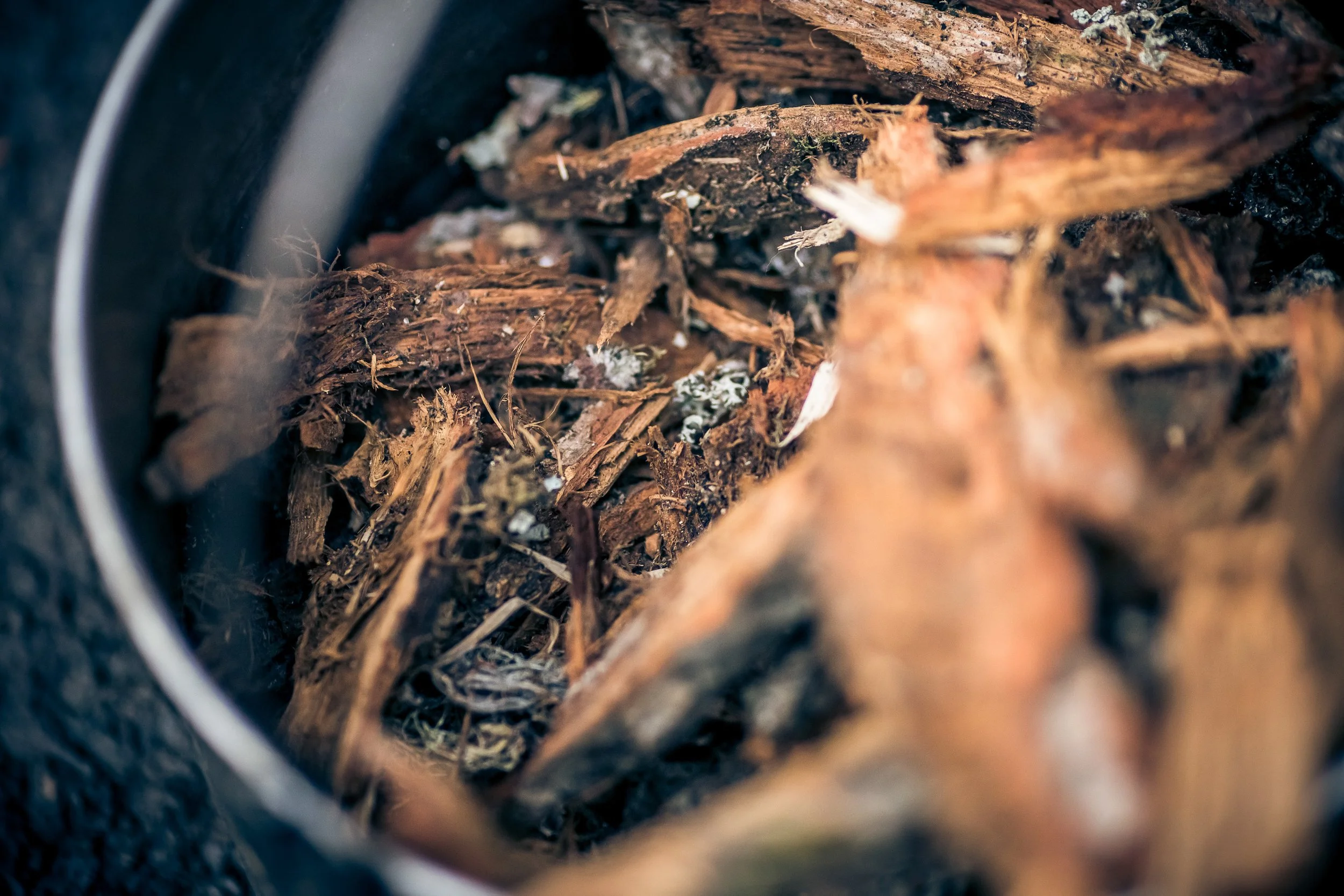
Our leathers are made from carefully sourced hides and skins - fish skins from Scotland’s smoked salmon suppliers, sheepskins from crofts and smallholdings, and deer hides from estates, farms and the wild Scottish landscape. Native tree barks, such as oak and willow, are gathered locally.
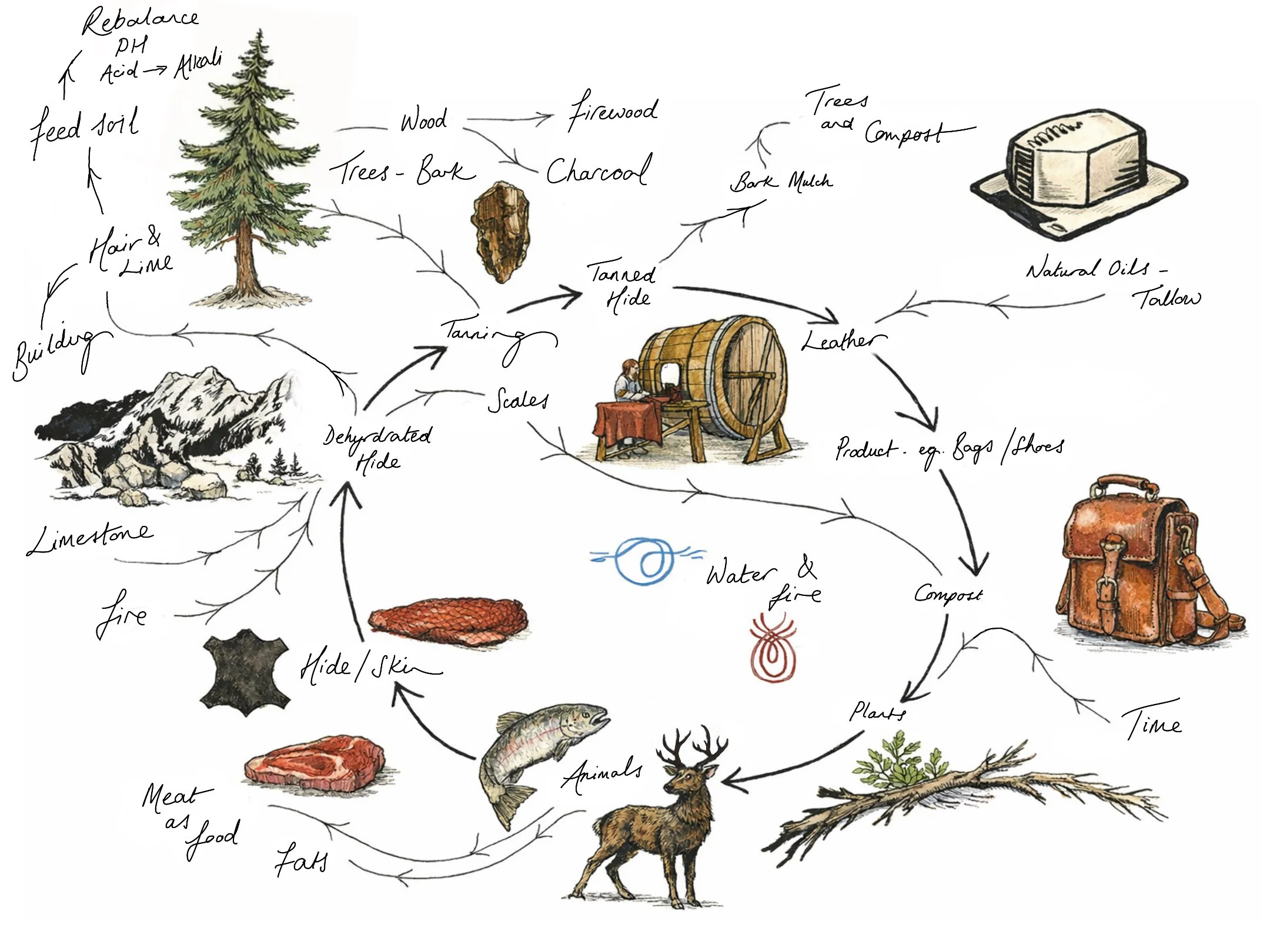
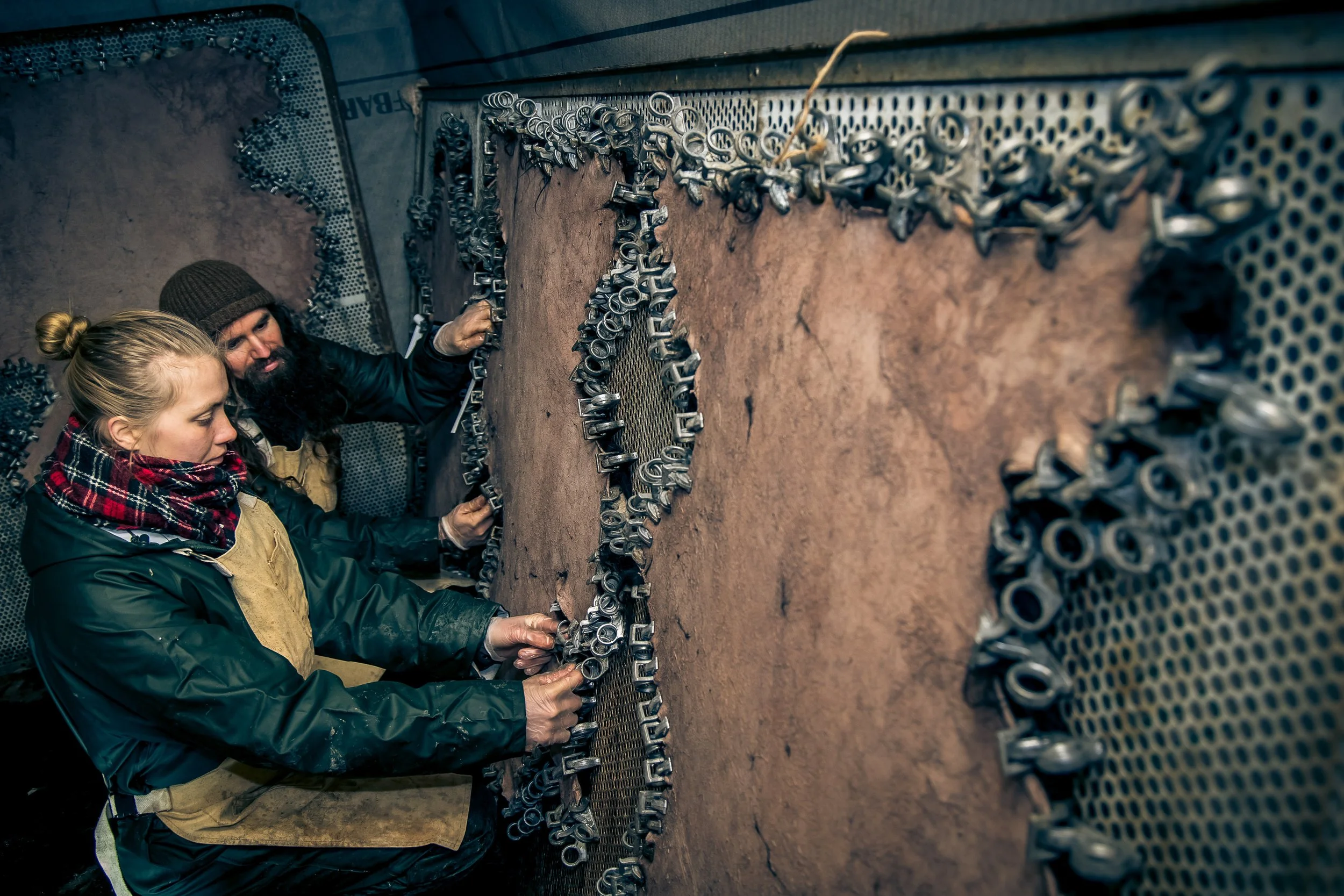
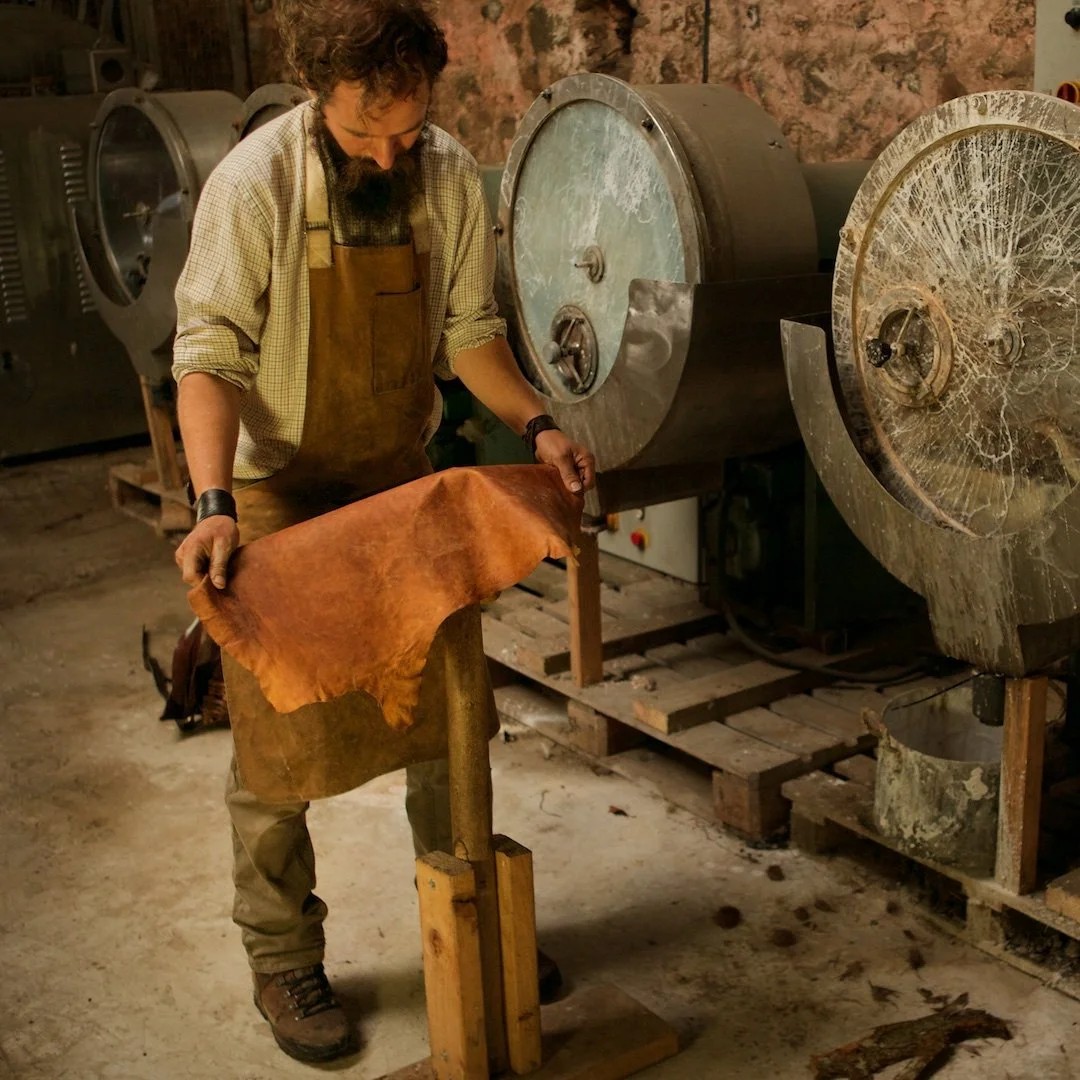
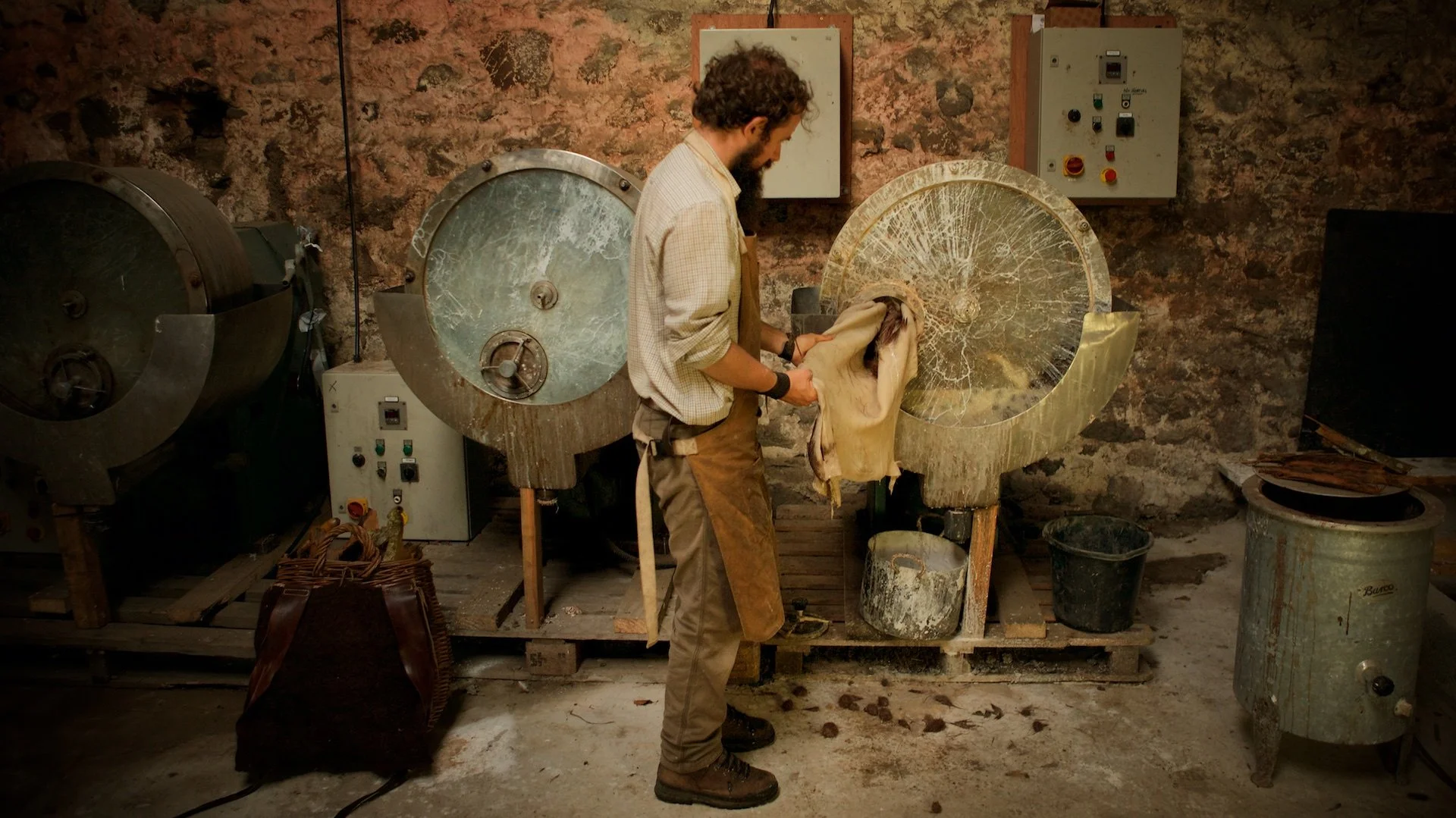
The way we transform our hides involves various traditional processes - including limestone submersion, hand scraping hides to remove the hair and then re-washing in preparation for tanning. Hides are then tanned through submersion in a bark solution for anywhere up to 12 months, made from locally harvested barks including oak, willow, spruce and birch - and other tannin-rich sources which are typical of traditional tanning in Scotland, such as peat and tormentil root. Hides are then softened through the application of natural fats and oils such as neatsfoot and tallow.
Through this process we reduce waste, strengthen the relationship between craft and landscape, and support a circular economy — one guided by the same principles of resourcefulness and care that shaped traditional practice.
The following diagram shows our environmentally friendly process and zero-waste approach - highlighting hide tanning as a circular system which directly feeds and nourishes the land.